Source Travel Limit Switch for Microwave, Building, and Industrial Use
Compare 30 travel limit switch options from verified Chinese suppliers. Buyers can evaluate specifications like IP ratings, breaking capacity, and mechanical life for microwave ovens, building applications, and industrial machinery.
Key considerations
Products List


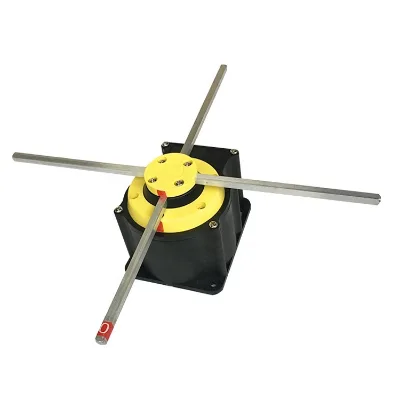


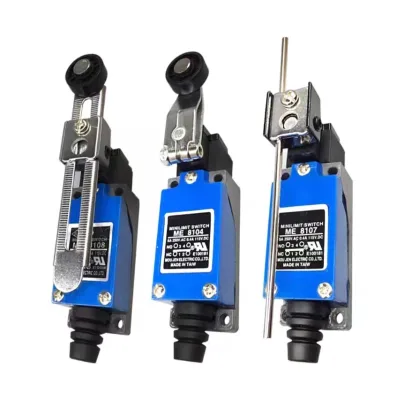


Comprehensive Sourcing Guide
Strategic Sourcing Guide for Travel Limit Switches
Understanding the Technical Landscape of Limit Switches
When sourcing travel limit switches, buyers must first navigate a complex technical landscape where terminology and specific operational requirements vary significantly. The core keyword "travel limit switch" often encompasses a broad spectrum of devices, from simple push-button mechanisms to complex angle limit switches designed for extreme applications. Based on current market observations, these components are defined by their actuation methods, electrical ratings, and environmental resilience. A critical distinction exists between switches designed for general industrial control and those tailored for specific high-stress environments, such as microwave ovens or heavy-duty building automation systems.
The mechanical structure of these switches is a primary determinant of their suitability. Market data indicates a prevalence of "Push-Button" and "Spring Roller" actuation types. Push-button mechanisms are typically favored for applications requiring direct, manual actuation with a single control switch, whereas spring roller variants are often preferred for applications involving continuous movement or contact with moving parts, such as conveyor systems or automated doors. Furthermore, the "Breaking Form" of the switch is a vital specification; buyers may encounter "Single Type" configurations for basic circuit interruption or "Duplex Type" arrangements for more complex safety interlocks. The "Number of Switch" also varies, with options ranging from "Single Control Switch" to "Double Control Switch," directly influencing the wiring complexity and redundancy of the final system.
Electrical performance is equally critical. Observed specifications reveal a wide range of current and voltage ratings. Some units are rated for a maximum current of 20A at 250VAC, suitable for high-power industrial loads, while others are designed for lower currents, such as 5A, often paired with DC breaking capacities. This variance necessitates a rigorous review of the load profile before selection. Additionally, the "Breaking Capacity" is a nuanced attribute; while some switches are rated for micro-current applications, others are explicitly designed for DC breaking, which presents different arc suppression challenges compared to AC. The "Mechanical Life" and "Electrical Life" are key longevity indicators, with high-performance units claiming over 1,000,000 mechanical cycles and 100,000 electrical cycles, ensuring durability in high-frequency operation environments.
Compliance and Certification Verification Protocols
In the B2B procurement of industrial components, compliance is not merely a formality but a fundamental risk mitigation strategy. Buyers must verify that the travel limit switches they source meet the necessary regulatory standards for their target markets. The supplied data highlights specific certifications that are frequently observed in the market, including CCC (China Compulsory Certification) and CE (Conformité Européenne). The presence of these marks suggests adherence to specific safety and electromagnetic compatibility standards, which is essential for selling products in China and the European Union, respectively.
However, the certification landscape is not uniform across all product models. Some listings indicate a combination of certifications, such as "CCC, CE, ISO," while others may only list "CE." It is imperative for buyers to understand that certification status is product-specific and not a blanket attribute of the entire category. For instance, a switch model designated as "V-156-1C25" may carry different certification obligations compared to a model like "WLCA2-2Q." Buyers should not assume that a supplier's general certification covers every SKU they offer. Instead, procurement teams must request specific certification documentation for the exact model numbers being purchased.
Beyond the visible certifications, buyers should be aware of the broader standard frameworks that often underpin these products, even if not explicitly listed on every datasheet. Standards such as UL 508, IEC 60947-1, and EN 60947-5-1 are frequently referenced in the industry as benchmarks for safety and performance. While the provided data does not confirm that every listed product meets these specific standards, they represent the typical expectations for high-quality industrial limit switches. Procurement professionals should verify if the supplier can provide test reports or third-party validation confirming compliance with these international standards, particularly if the end application involves critical safety systems or export to regions with strict regulatory requirements.
Cost Drivers and Pricing Structure Analysis
The pricing of travel limit switches is influenced by a confluence of factors, including material composition, electrical ratings, and customization requirements. The observed price range in the market spans from $0.04 to $400, a variance that reflects the diversity of the product category. At the lower end of the spectrum, basic push-button switches with standard ratings and minimal customization likely fall into the sub-dollar price bracket. Conversely, the upper end of the price range may correspond to specialized units featuring advanced materials, higher electrical ratings, or complex configurations such as "Angle Limit Switches" with "Extreme Limit" structures.
Material selection is a primary driver of cost. The market data indicates the use of materials such as "Aluminum" and "Stainless Steel Idler Wheel." Stainless steel components, often used in harsh environments or where corrosion resistance is paramount, typically command a higher price than standard aluminum or plastic alternatives. The weight of the component, with some units ranging from 580g to 680g, also suggests a robust build quality that correlates with higher manufacturing costs.
Customization is another significant cost factor. While "Customization" is listed as an available attribute, the extent of this customization directly impacts the final price. Orders requiring non-standard dimensions, specific actuator types, or unique packaging configurations will incur additional tooling and setup costs. The "Product Packing" specifications, ranging from "100PCS in One Box" to "1PCS in One Box," also influence logistics costs. Bulk packaging reduces per-unit shipping costs, whereas custom or small-batch packaging increases the overall expense. Buyers must balance the need for specific features against the budget constraints, understanding that higher performance and customization inevitably lead to higher unit costs.
Typical Applications and Operational Environments
Travel limit switches are deployed across a diverse array of industries, each with unique operational demands. The data highlights specific applications, such as "Microwave Oven" and "Building" automation, illustrating the versatility of these components. In microwave ovens, the switches often serve as safety interlocks to prevent operation when the door is open, requiring high reliability and specific electrical ratings. In building applications, they may be used for door controls, gate automation, or safety barriers, where durability and resistance to environmental factors are crucial.
The operating environment is a critical consideration for application suitability. The "Environment" attribute indicates that some switches are designed for temperatures below 250℃, while the "Operating Temperature" range for others is specified as -25℃ to 80℃. This wide range suggests that these components are engineered to withstand both extreme cold and moderate heat, making them suitable for outdoor installations or industrial processes with fluctuating thermal conditions. Furthermore, the "Protection" rating is a key indicator of environmental resilience. Many units are described as "Waterproof," with specific IP ratings such as IP65 and IP67. An IP67 rating, for instance, implies protection against temporary immersion in water, making these switches ideal for washdown environments or outdoor machinery exposed to rain.
The "Switching Element" also plays a role in application selection. While traditional mechanical switches are common, some listings mention "Contactless Type" options like "Reed Switch" or "Speed Switch." These contactless variants are beneficial in applications where mechanical wear is a concern or where the operating environment is too harsh for physical contact. For example, in high-speed machinery, a "Speed Switch" might be preferred to monitor rotational velocity without the friction and wear associated with mechanical contact.
Supplier Evaluation and Origin Verification
Evaluating suppliers requires a careful assessment of their geographical origin, production capabilities, and quality assurance processes. The market data indicates that a significant portion of these products originate from "Zhejiang China (Mainland)," with specific mentions of "Yueqing, Zhejiang" and general "China" origins. Zhejiang is a well-known manufacturing hub for electrical components, offering a robust supply chain and competitive pricing. However, buyers should not rely solely on the region; they must verify the specific capabilities of the supplier to ensure they can meet the required quality standards.
Supplier evaluation should also include an analysis of their production standards and packaging practices. The "Standard" attribute lists options such as "Standard export packing" and "Normal Size," but buyers should confirm that the supplier adheres to international shipping standards to prevent damage during transit. Additionally, the "Product Packing" details, such as "10PCS in One Box and 100 in One Carton," provide insight into the supplier's logistical efficiency. A supplier that offers flexible packing options, such as "as Customer Request," demonstrates a customer-centric approach and the ability to adapt to specific client needs.
When assessing suppliers, buyers should also consider the "Model" diversity. The presence of various model numbers like "V-156-1C25," "WLCA2-2Q," "DXZ-4/7W," and "TSA-003" suggests a broad product portfolio. A supplier with a diverse range of models is more likely to have the technical expertise to support complex procurement needs and provide tailored solutions. However, buyers must ensure that the supplier can maintain consistent quality across their entire product line, as variations in manufacturing processes can lead to inconsistencies in performance.
Quality Control and Long-Term Procurement Considerations
Ensuring long-term reliability requires a proactive approach to quality control and supplier relationship management. The "Mechanical Life" and "Electrical Life" specifications, such as "1,000,000times Above" and "100,000times Above," serve as benchmarks for expected durability. However, these figures are often based on ideal testing conditions. Buyers should request real-world performance data or case studies to validate these claims. Regular quality audits and sample testing are essential to verify that the supplied products consistently meet the specified life cycles and performance criteria.
Long-term procurement considerations also involve managing the supply chain's resilience. The "MOQ" (Minimum Order Quantity) range of 1 to 1000 units offers flexibility for both small-scale testing and large-scale production runs. Buyers should negotiate terms that allow for scalable ordering without compromising on quality or lead times. Additionally, the "Lead Time" and "Production Capacity" of the supplier are critical factors in maintaining a steady supply. While specific lead times are not provided in the data, buyers should establish clear expectations regarding delivery schedules and contingency plans for supply disruptions.
Finally, the "Customization" aspect offers a strategic advantage for buyers seeking to differentiate their products. By working closely with suppliers to develop custom solutions, companies can optimize their designs for specific applications, potentially reducing costs and improving performance. However, customization requires a high level of collaboration and clear communication of requirements. Buyers should establish a robust framework for managing custom orders, including detailed specifications, prototype approval processes, and quality acceptance criteria. By prioritizing these long-term considerations, buyers can build a resilient supply chain that supports their operational goals and ensures the continued reliability of their travel limit switch components.
FAQs
What certifications do travel limit switches typically have?
Many travel limit switches carry CCC and CE certifications for safety compliance. Some models also include ISO standards, but certification status varies by specific product model and should be verified before purchase.
How long is the mechanical life of these switches?
High-performance travel limit switches often exceed 1,000,000 mechanical cycles. This durability ensures reliability in high-frequency operation environments, though actual lifespan depends on specific usage conditions and load profiles.
Which materials are used for travel limit switch construction?
Common materials include aluminum and stainless steel idler wheels for durability. Stainless steel variants are preferred for harsh environments requiring corrosion resistance, while aluminum is used for standard industrial applications.
Can these switches operate in extreme temperatures?
Yes, many units operate between -25°C and 80°C. Some specialized models are rated for environments below 250°C, making them suitable for both cold outdoor installations and moderate heat industrial processes.
What is the maximum current rating for these switches?
Maximum current ratings vary, with some units rated up to 20A at 250VAC. Others are designed for lower currents like 5A, often paired with DC breaking capacities, so load profiles must be reviewed carefully.
How are these switches packaged for shipment?
Packaging options range from 1 to 100 pieces per box depending on the model. Standard export packing is common, but suppliers often offer custom packaging configurations to meet specific client logistics requirements.